

2023-04-27 , 8616 , 104 , 261
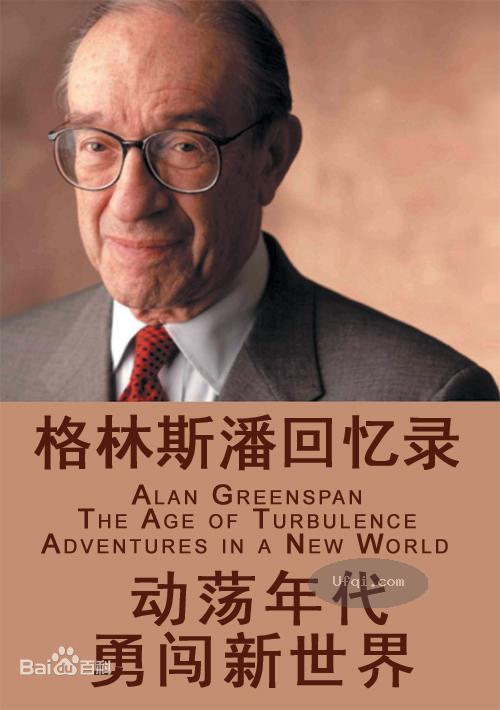
美联储主席艾伦格林斯潘回忆录——动荡年代:勇闯新世界-the age of turbulence-5
Like many other analysts, economists at the Fed were looking at all
8
the proposed packages of spending and tax cuts, and the numbers associated
with them. In each case, we tried to cut through the details to gauge
the order of magnitude; interestingly, they all fell in the ballpark of $100
billion—Larry Lindsey's initial suggestion.
We reconvened in Hastert's conference room on Wednesday, October 3,
to talk again about the economy. Another week had passed, and the number
of initial jobless claims had gotten worse—an additional 517,000 people
had applied for unemployment benefits. By now, my mind was made
up. While I still expected more attacks, there was no way to know how
devastating they might be or how to protect the economy in advance. I told
the group that we should take steps to offset the damage we could measure,
and that it was indeed time for a constrained stimulus. What seemed
about right was a package of actions on the order of $100 billion—enough,
but not so much that it would overstimulate the economy and cause interest
rates to rise. The lawmakers seemed to agree.
I went home that night thinking that all I'd done was articulate and reinforce
a consensus; the $100 billion figure had first come from Larry. So I
was surprised to read the media's spin on the meeting, which made it sound
almost as though I were running the entire show.* While it was gratifying
to hear that Congress and the administration were listening to me, I found
these press reports unsettling. I've never been entirely comfortable being
cast as the person who calls the shots. From my earliest days, I had viewed
myself as an expert behind the scenes, an implementer of orders rather
than the leader. It took the stock-market crisis of 1987 to make me feel
comfortable making critical policy decisions. But to this day, I feel ill at ease
in the spotlight. Extrovert, I am not.
Of course, the irony was that in spite of my supposed persuasive power,
in the weeks after 9/11 nothing worked out as I expected. Anticipating a
second terrorist attack was probably one of the worst predictions I ever
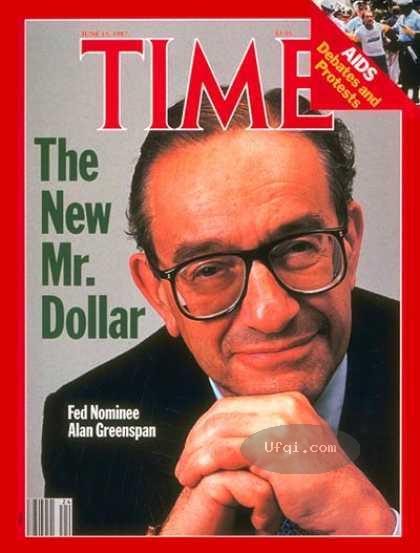
*Time magazine, for example, opined on October 15, 2001, "Greenspan's shift provided the green light lawmakers had been waiting for.... The White House and leaders of both parties have agreed with Greenspan's assessment that new spending and tax cuts should total about 1% of the country's annual income, that it should make its effects felt quickly and that it should not threaten to balloon the deficit so much down the road that it immediately raises long-term interest rates."
9
made. And the "constrained stimulus" I had supposedly green-lighted didn't
happen either. It bogged down in politics and stalled. The package that
finally emerged in March 2002 not only was months too late but also had
little to do with the general welfare—it was an embarrassing mess of pork-
barrel projects.
Yet the economy righted itself. Industrial production, after just one
more month of mild decline, bottomed out in November. By December the
economy was growing again, and jobless claims dropped back and stabilized
at their pre-9/11 level. The Fed did have a hand in that, but it was

only by stepping up what we'd been doing before 9/11, cutting interest
rates to make it easier for people to borrow and spend.
I didn't mind seeing my expectations upset, because the economy's remarkable
response to the aftermath of 9/11 was proof of an enormously
important fact: our economy had become highly resilient. What I'd said so
optimistically to the Senate Banking Committee turned out to be true. After
those first awful weeks, America's households and businesses recovered.
What had generated such an unprecedented degree of economic flexibility?
I asked myself.
Economists have been trying to answer questions like that since the
days of Adam Smith. We think we have our hands full today trying to comprehend
our globalized economy. But Smith had to invent economics almost
from scratch as a way to reckon with the development of complex
market economies in the eighteenth century. I'm hardly Adam Smith, but
I've got the same inquisitiveness about understanding the broad forces that
define our age.
This book is in part a detective story. After 9/111 knew, if I needed
further reinforcement, that we are living in a new world—the world of a
global capitalist economy that is vastly more flexible, resilient, open, self-
correcting, and fast-changing than it was even a quarter century earlier. It's a
world that presents us with enormous new possibilities but also enormous
new challenges. The Age of Turbulence is my attempt to understand the nature
of this new world: how we got here, what we're living through, and
what lies over the horizon, for good and for ill. Where possible, I convey my
understanding in the context of my own experiences. I do this out of a
sense of responsibility to the historical record, and so that readers will know
10
where I'm coming from. The book is therefore divided into halves: the first
half is my effort to retrace the arc of my learning curve, and the second half
is a more objective effort to use this as the foundation on which to erect a
conceptual framework for understanding the new global economy. Along
the way I explore critical elements of this emerging global environment: the
principles of governing it that arose out of the Enlightenment of the eighteenth
century; the vast energy infrastructure that powers it; the global financial
imbalances and dramatic shifts in world demographics that threaten
it; and, despite its unquestioned success, the chronic concern over the justice
of the distribution of its rewards. Finally, I bring together what we can
reasonably conjecture about the makeup of the world economy in 2030.
I don't pretend to know all the answers. But from my vantage point at
the Federal Reserve, I had privileged access to the best that had been
thought and said on a wide range of subjects. I had access to the broad
scope of academic literature that addressed many of the problems my Fed
colleagues and I had to grapple with every day. Without the Fed staff, I
could never have coped with the sheer volume of academic output, some
exceptionally trenchant and some tedious. I had the privilege of calling one
or more of the Federal Reserve Board's economic staff and asking about academic
work of current or historical interest. I would shortly receive detailed
evaluations of the pros and cons on virtually any subject, from the
latest mathematical models developed to assess risk neutrality, to the emergence
and impact of land-grant colleges in the American Midwest. So I
have not been inhibited in reaching for some fairly sweeping hypotheses.
A number of global forces have gradually, sometimes almost clandestinely,
altered the world as we know it. The most visible to most of us has
been the increasing transformation of everyday life by cell phones, personal
UfqiLong
computers, e-mail, BlackBerries, and the Internet. The exploration after
World War II of the electronic characteristics of silicon led to the development
of the microprocessor, and when fiber optics combined with lasers
and satellites revolutionized communications capacities, people from Pekin,
Illinois, to Peking, China, saw their lives change. A large percentage of
the world's population gained access to technologies that I, in setting out
on my long career in 1948, could not have imagined, except in the context
of science fiction. These new technologies not only opened up a whole
new vista of low-cost communications but also facilitated major advances
in finance that greatly enhanced our ability to direct scarce savings into
productive capital investments, a critical enabler of rapidly expanding globalization
and prosperity.
Tariff barriers declined in the years following World War II, a result of
a general recognition that protectionism before the war had led to a spiraling
down of trade—a reversal of the international division of labor which
contributed to the virtual collapse of world economic activity. The postwar
liberalization of trade helped open up new low-cost sources of supply;
coupled with the development of new financial institutions and products
(made possible in part by silicon-based technologies), it facilitated the forward
thrust toward global market capitalism even during the years of the
cold war. In the following quarter century, the embrace of free-market capitalism
helped bring inflation to quiescence and interest rates to single digits
globally.
The defining moment for the world's economies was the fall of the
Berlin Wall in 1989, revealing a state of economic ruin behind the iron curtain
far beyond the expectations of the most knowledgeable Western economists.
Central planning was exposed as an unredeemable failure; coupled
with and supported by the growing disillusionment over the interventionist
economic policies of the Western democracies, market capitalism began
quietly to displace those policies in much of the world. Central planning
was no longer a subject for debate. There were no eulogies. Except in North
Korea and Cuba, it was dropped from the world's economic agenda.
Not only did the economies of the former Soviet bloc, after some chaos,
embrace the ways of market capitalism, but so did most of what we previously
called the third world—countries that had been neutral in the cold
war but had practiced central planning or had been so heavily regulated
that it amounted to the same thing. Communist China, which had edged
toward market capitalism as early as 1978, accelerated the movement of
its vast, tightly regulated, then more-than-500-million-person workforce toward
the Free Trade Zones of the Pearl River delta.
China's shift in protecting the property rights of foreigners, while subtle,
was substantial enough to induce a veritable explosion in foreign direct
investment (FDI) into China following 1991. From a level of $57 million
in 1980, FDI drifted upward, reaching $4 billion in 1991, and then accelerated
at a 21 percent annual rate, reaching $70 billion in 2006. The investment,
joined with the abundance of low-cost labor, resulted in a potent
combination that exerted downward pressure on wages and prices throughout
the developed world. Earlier, the much smaller so-called Asian Tigers,
especially South Korea, Hong Kong, Singapore, and Taiwan, had showed
the way by engaging developed-country technologies to bring their standard
of living sharply higher through exports to the West.
12
(未完待续, To be contd)

🔗 连载目录
 2. 美联储主席格林斯潘回忆录——动荡年代:勇闯新世界-2:内容目录
3. 美联储主席格林斯潘回忆录——动荡年代:勇闯新世界-the age of turbulence-3
4. 美联储主席格林斯潘回忆录——动荡年代:勇闯新世界-the age of turbulence-4
🔴 5. 美联储主席艾伦格林斯潘回忆录——动荡年代:勇闯新世界-the age of turbulence-5
6. 美联储主席艾伦格林斯潘回忆录——动荡年代:勇闯新世界-the age of turbulence-6
7. 美联储主席艾伦格林斯潘回忆录——动荡年代:勇闯新世界-the age of turbulence-7
8. 美联储主席艾伦格林斯潘回忆录——动荡年代:勇闯新世界-the age of turbulence-8
9. 美联储主席艾伦格林斯潘回忆录——动荡年代:勇闯新世界-the age of turbulence-9
10. 美联储主席艾伦格林斯潘回忆录——动荡年代:勇闯新世界-the age of turbulence-10
11. 美联储主席艾伦格林斯潘回忆录——动荡年代:勇闯新世界-the age of turbulence-11
12. 美联储主席艾伦格林斯潘回忆录——动荡年代:勇闯新世界-the age of turbulence-12
13 14 15 1624. 美国联邦储备委员会主席艾伦格林斯潘回忆录——动荡年代:勇闯新世界-the age of turbulence-24
25 26 27 28 29 30 31 32
36. 美国联邦储备委员会主席艾伦格林斯潘回忆录——动荡年代:勇闯新世界-the age of turbulence-36
37 38 39 40 41 42 43 44 45 46 4748. 美联储主席艾伦格林斯潘回忆录--动荡年代:勇闯新世界-the age of turbulence-48
60. 美联储主席艾伦格林斯潘回忆录--动荡年代:勇闯新世界-the age of turbulence-60
61 62 63 64
72. 美联储主席格林斯潘回忆录——动荡年代:勇闯新世界-the age of turbulence-72
73 74 75 76 77 78 79 8084. 美联储主席格林斯潘回忆录——动荡年代:勇闯新世界-82:虎象之争-3
85 86 87 88 89 90 91 92 93 94 9596. 美联储主席格林斯潘回忆录——动荡年代:勇闯新世界-94:CURRENT ACCOUNTS AND DEBT-3
108. 美联储主席格林斯潘回忆录--动荡年代:勇闯新世界-106:THE CONUNDRUM-3
109 110 111 112120. 美联储主席格林斯潘回忆录——动荡年代:勇闯新世界-118: THE WORLD RETIRES-3
121 122 123 124 125 126 127 128
132. 美联储主席格林斯潘回忆录--动荡年代:勇闯新世界-127:THE LONG-TERM ENERGY SQUEEZE-7
133 134 135 136 137 138 139 140 141 142 143144. 美联储主席格林斯潘回忆录--动荡年代:勇闯新世界-134:The Delphic Future-11
🤖 智能推荐
津巴多普通心理学 Psychology: Core Concepts-10: 第六章 思维与智力-18
比尔季前赛3战全胜收官 53人名单周日截止前最后预测出炉 7
CBA休赛季:山东男篮有意王岚嵚,杨鸣下一步计划敲定,郭艾伦确定被放弃,中国男篮最新排名出炉 6
🔥 相关精选
先签后换?曝湖人有意用詹姆斯换骑士艾伦 美媒列6换4交易方案 3